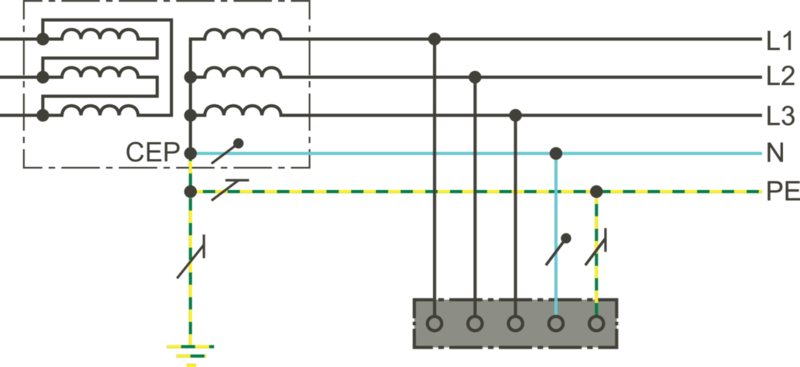
In TN-S systems, the neutral conductor (N) and protective conductor (PE) are consistently separated from each other. The neutral conductor may only be connected to PE at one point, namely the central earthing point (CEP).
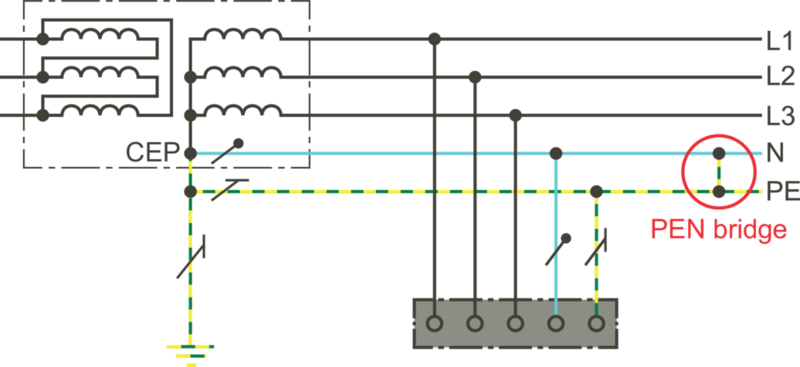
Multiple earthings of the neutral conductor (often referred to as PEN bridges) must be avoided at all costs, as this leads to stray or interference currents. These flow, for example, via the shielding of network cables or via conductive parts of the building structure (foundation earth electrode) or water and gas pipes via the equipotential bonding conductors and can lead to corrosion and EMC interference and impair the reliable operation of an electrical system.
Electrical systems in existing buildings in particular are often designed as TN-C systems. This means that PE and N conductors are not consistently separated. The DIN VDE 0100-444 standard recommends conversion to a TN-S system in order to prevent electromagnetic interference. However, multiple earthings cannot be completely ruled out after a conversion. In practice, it is often new equipment that has a PEN bridge ex works, or 4-core cables are used instead of 5-core cables due to cost-saving measures. In distant buildings, failure to comply with switch-off conditions may also require the use of an RCD or an additional earthing point.
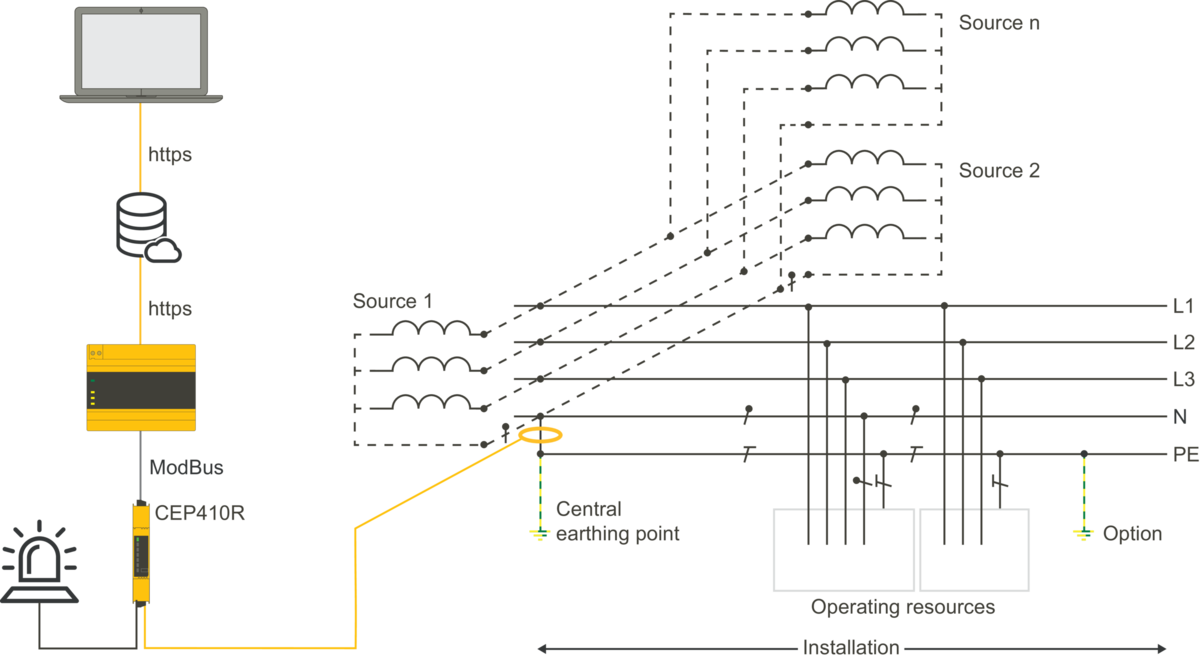
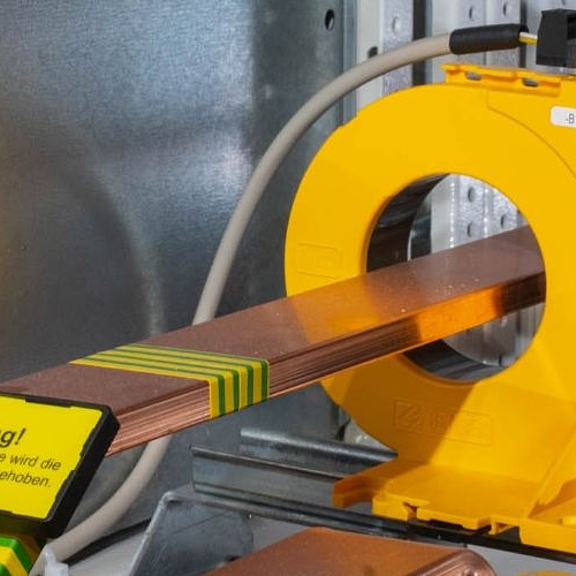
In order to detect multiple earthings and stray currents in a TN-S system and thus ensure a high level of electromagnetic compatibility (EMC), the central earthing point (CEP) should be permanently monitored. A current transformer at the CEP can be used to measure stray currents and physically induced leakage currents in the equipment. If a high current occurs at the PE with a frequency of 50 Hz, this may be an indication of multiple earthings in the TN-S system. By continuously monitoring currents at the CEP, the operator receives an initial indication and can evaluate their electrical system with regard to possible PEN bridges and increasing leakage currents.
Existing systems in particular must be checked and optimised for electromagnetic compatibility (EMC). During renovation or expansion work, permanent CEP monitoring is the basis for safe and reliable operation of the electrical system. Foldable current transformers with high measuring accuracy are available for retrofit measures. These can be easily integrated into existing systems and significantly reduce installation costs.
Products
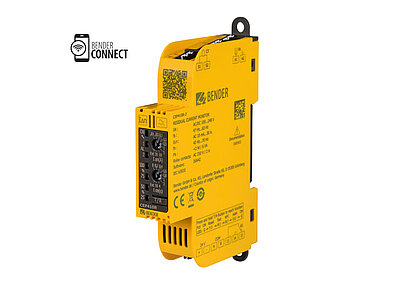
Single-channel monitoring device for the central earthing point
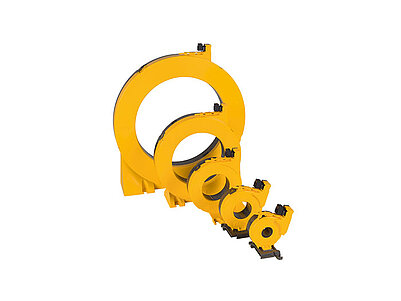
Measuring current transformers
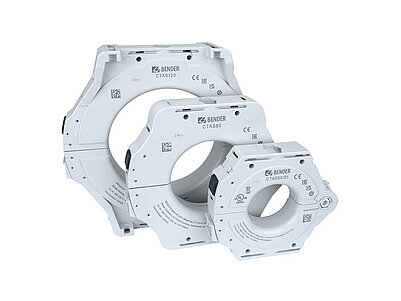
Divisible measuring current transformer
Single-channel monitoring device for the central earthing point
Measuring current transformers
Divisible measuring current transformer
| Name | Category | Size | Language | Timestamp | D-/B-Number |
|---|---|---|---|---|---|
| CEP - Central earthing Point | Market Segment Brochures | 430.1 KB | EN | 2026/03/2323.03.2026 |

Please contact us! We are here to help.
To contact formThe technology in brief and why there are different devices for different applications.
Advantages and benefits of resiual current monitoring.
How you avoid downtimes of electrical systems with residual current monitoring