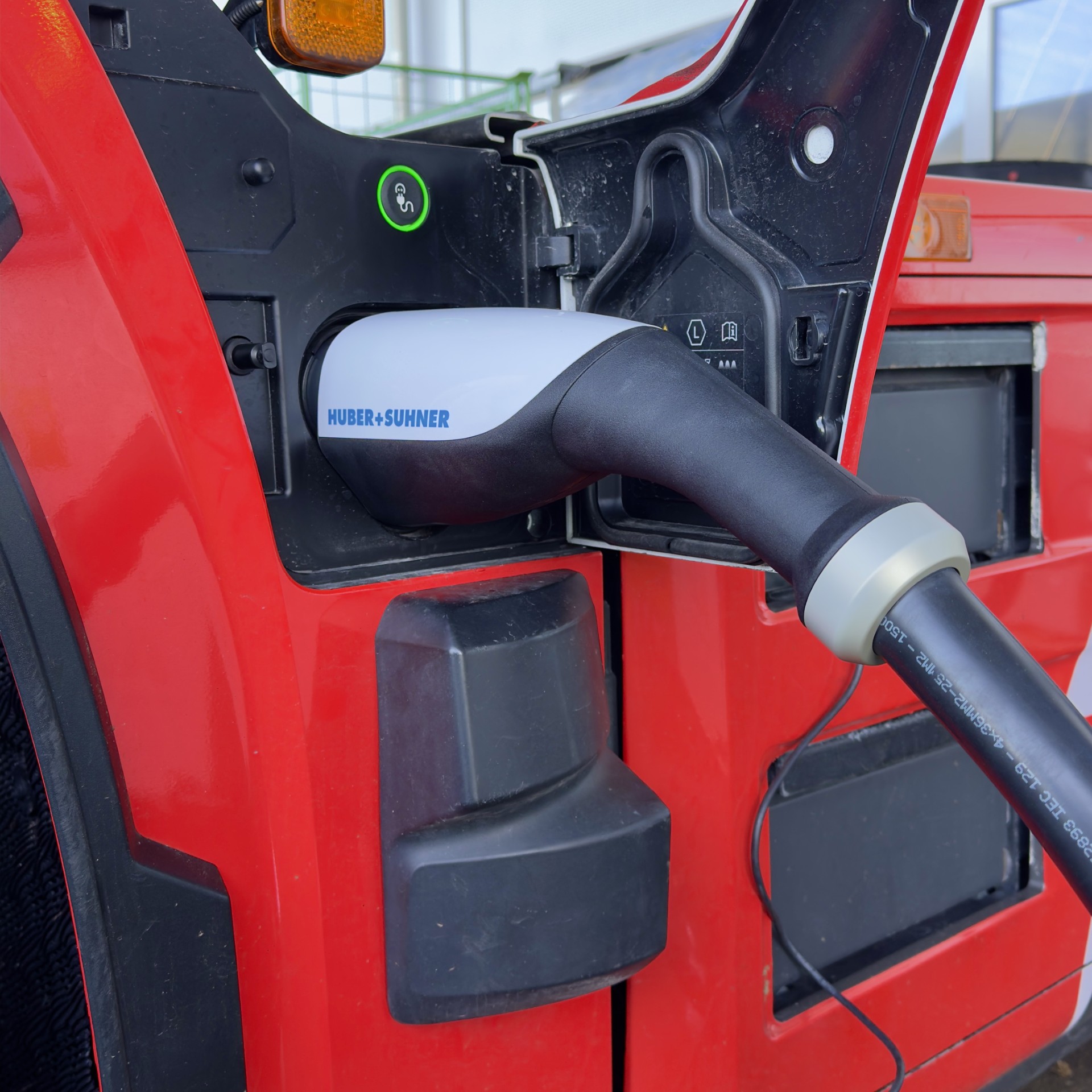
Megawatt Charging Systems (MCS) are setting new standards: up to 3.75 MW charging power, high-voltage architectures up to 1,500 V, and the regulatory requirement for active voltage balancing in accordance with IEC 61851-23-3 (only for charging voltages > 1,000 V). These requirements make MCS a technologically challenging field within electric mobility.
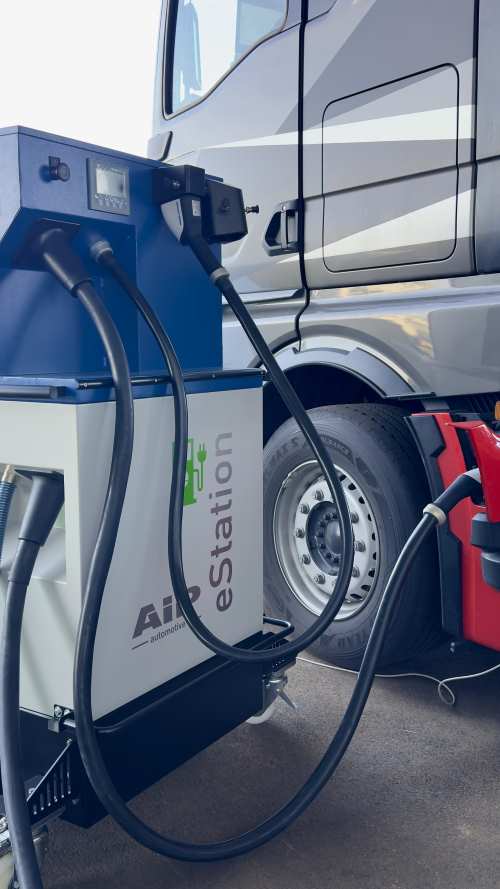
AIP GmbH & Co. KG is an established supplier of modular test and inspection systems for international OEMs. AIP’s new, modular MCS charging station is specifically designed for development and validation environments – where the highest levels of safety, reliability and compliance with standards are crucial.
AIP is thus one of the first companies to deploy MCS in real-world test bench scenarios and to translate new standards into market-ready solutions at an early stage.
If you would like a concise overview of megawatt charging, the technical challenges involved and suitable safety solutions, you will find all the relevant information in our flyer.
The new IEC 61851-23-3 standard introduces, for the first time, clear safety requirements for megawatt charging – in particular, the mandatory active voltage balancing to prevent dangerous touch currents.
This function is technically challenging, safety-critical and cannot be implemented using existing standard IMDs.
The solution – test installation of the isoMCS
Bender’s upcoming isoMCS is the first device to fully address the requirements of the new MCS standard: it combines insulation monitoring for systems up to 1,500 V with integrated, patented voltage balancing, which is mandatory for the safe operation of MCS charging stations.
The prototype was integrated into AIP’s new, modular MCS charging station within a few hours and subsequently validated in several test cycles under real-world load conditions.
Specific technical challenges
A number of challenges arose during integration:
The collaboration between Bender and AIP demonstrates what the next generation of megawatt charging infrastructure could look like: safe, flexible and ready for the market. We look forward to continuing our partnership and working together on future projects.
Meta Description: Successful test installation of the new isoMCS insulation monitoring device at AIP: standard-compliant voltage balancing, insulation monitoring up to 1,500 V and easy integration for megawatt charging.