Electric vehicles are becoming active components of the energy system. Bidirectional charging is the key to stabilising the grids and opening up new business models.
With bidirectional charging, energy can not only be stored, but also fed back into buildings and the electricity grid as required. This creates new opportunities to use energy more efficiently and manage it flexibly.
New international standards are, for the first time, establishing a uniform technological basis for AC charging solutions. They enable scalable, interoperable applications and make bidirectional charging economically viable and practical to implement.
Bidirectional charging means that energy flows not only into the vehicle, but also back out:
Electric vehicles thus become decentralised energy storage units and active components in the energy system.
Bidirectional charging means that an electric vehicle becomes part of an energy generation system. This increases the technical requirements, as technical and regulatory standards must be met as soon as energy is fed back into the grid.
When it comes to bidirectional AC charging, the vehicle and the charging station form a single technical unit. The fourth edition of the IEC 61851-1 standard (from 2026) describes this system architecture and allocates tasks and responsibilities in accordance with the standard.
Furthermore, international standards ensure that the vehicle, charging station and the public electricity grid communicate reliably with one another via defined interfaces and protocols – independently of the manufacturer and in an interoperable manner.
The result: system and device boundaries are overcome, whilst regional and national requirements – such as those relating to grid connection and operation – are taken into account. This allows technical solutions to be deployed across Europe.
Bidirectional charging using AC charging infrastructure offers key advantages:
While business models are still evolving, key applications are already emerging:
This makes electric vehicles part of the energy value chain.
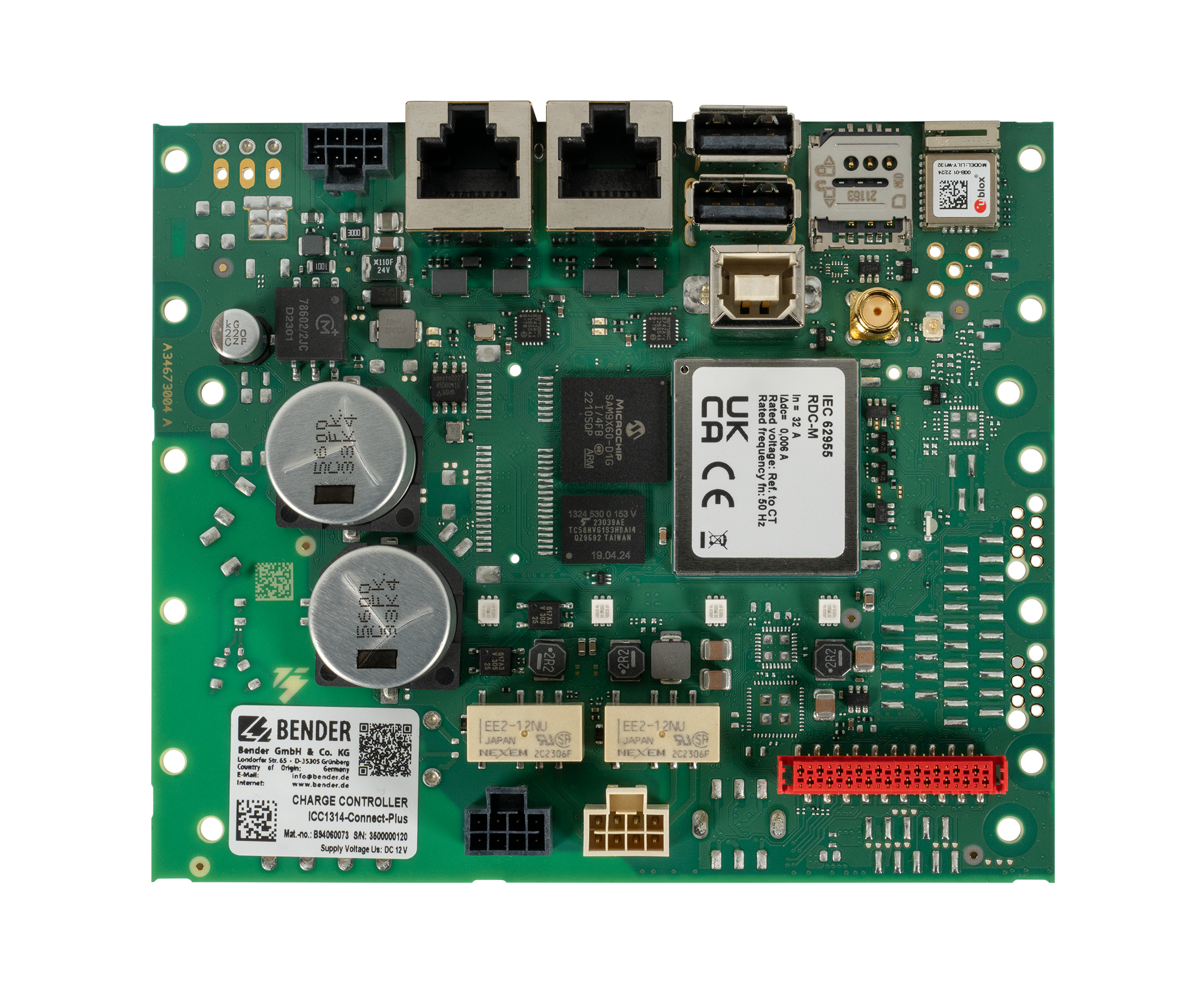
With its Charging Electronics platform solution, Bender offers a cost-effective transition from unidirectional charging to bidirectional charging. Our aim: to make bidirectional charging as easy to integrate as possible.
The result: a platform that meets today’s requirements and supports future developments.
Bidirectional charging is technically complex and grid-relevant. Bender supports you with technologies for:
Integrated network and system protection
Standard-compliant communication
System and platform integration
You focus on your business model – we take care of technology, safety and compliance.
At the CharIN V2G Testival Europe 2025 on the EUREF Campus in Berlin, Bender was the only solution on the market to date to demonstrate a ‘bidirectional AC application’ in accordance with ISO 15118-20: discharging a vehicle via AC – a milestone for Vehicle-to-Grid (V2G) integration via alternating current.
Nine manufacturers took part in the Testival with electric vehicles (EVs), charging stations (EVSEs) and test systems. This enabled manufacturer-independent set-ups to be configured and tested. Bender carried out its tests using a vehicle that Bosch had equipped with its Electric Vehicle Communication Controller (EVCC) for ISO 15118-20 communication and control.