Measurement with a strategy
How companies can make effective use of residual current monitoring
More and more companies are discovering the benefits of residual current monitoring. They want to use it to identify problems in their electrical installations, prevent failures and thereby increase the availability of their systems. However, there is a great deal of dangerous half-knowledge circulating on this subject.
This article aims to help readers better understand the technology and practical application of residual current measurement, in order to avoid misclassifications and misinterpretations.
A versatile solution for almost any purpose
Residual current monitoring is capable of detecting incipient insulation deterioration in electrical installations. Furthermore, it can detect harmonics and reactive currents, which can cause power losses and thermal stress within the installation. As monitoring takes place continuously (condition monitoring), problems are detected at an early stage. This makes residual current monitoring particularly suitable for use in systems that must operate with high availability and where unplanned outages must be avoided at all costs, e.g. in industry, production facilities or data centres. At the same time, residual current monitoring enables predictive maintenance, reduces the effort involved in periodic testing in accordance with DGUV Regulation 3, enhances personal safety and fire protection (protection against thermal effects) and can help to save on energy costs.
Residual current monitoring tailored to each system
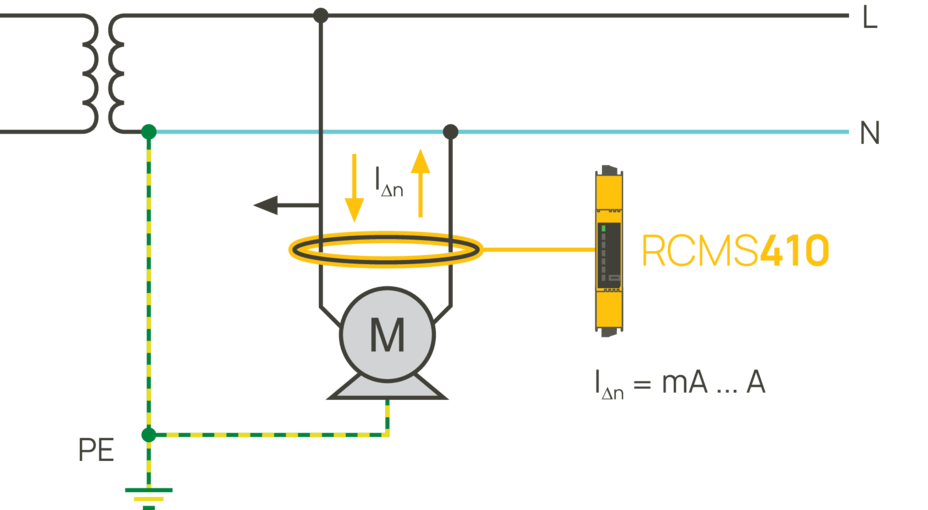
Every operator of an electrical installation should be aware that residual current measurement devices are not off-the-shelf solutions. Every electrical installation is different and varies in complexity. The type and size of the installation, as well as the equipment used, differ. It is also important to consider which parts of the installation must meet which requirements (including any regulatory ones).
It is therefore a fallacy to believe that simply installing residual current monitoring somewhere in a system will enable all potential problems to be identified and resolved. Operators and qualified electricians should be aware of the significance of a measurement taken at a specific point in the system – or, in short, they should know what they are measuring. Only then can they reliably assess the condition of their systems.
Accurate measurement requires a strategy
Depending on the purpose for which a residual current monitoring system is to be installed, it must be designed in accordance with the relevant requirements. This also determines where in the installation the measuring equipment should be installed – in the main distribution board, in a sub-distribution board, at the central earthing point or in the final circuits.
The wide range of applications and the complexity of modern electrical installations and equipment make it clear that, for example, residual current measurement carried out exclusively in the main distribution board is usually insufficient for the effective and safe monitoring of the entire installation. The load currents are far too high and any residual current that occurs may be far too small to provide any real indication of the condition of the electrical installation.
On the other hand, the use of measuring equipment solely in the final circuits is not appropriate if the overall condition of the installation is to be assessed.
Appropriate technology for the specific application and location
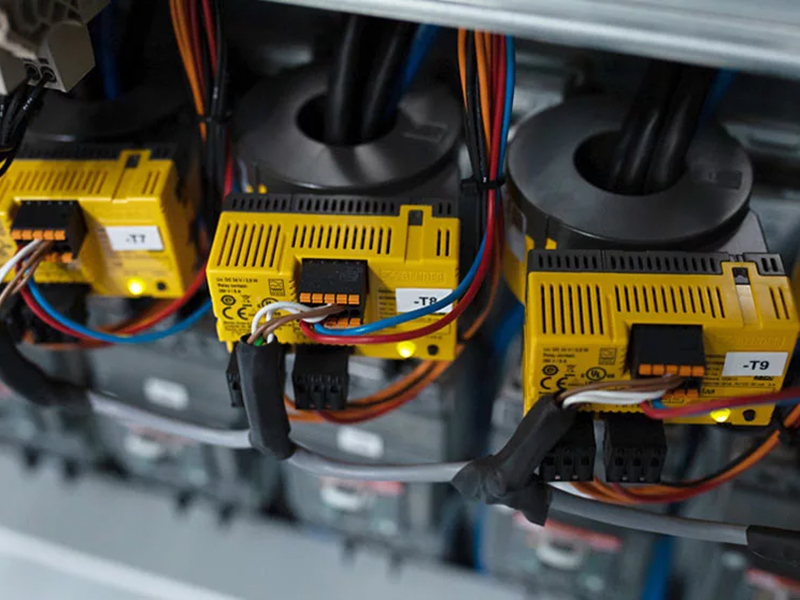
Operators must therefore be clear about the purpose for which they wish to use residual current monitoring and what conclusions the measurements are intended to provide. This requires a detailed analysis and careful planning. Only in this way can it be ensured that the residual current monitoring ultimately fulfils its purpose and delivers the desired benefits.
Furthermore, measurement technology suitable for the intended purpose and location must be used. Otherwise, the readings obtained will not provide a reliable indication of the condition of the electrical installation.
Examples of poorly planned system monitoring:
- Type A sensors are used, which cannot measure high-frequency currents or DC components.
- A Rogowski coil with a measurement range exceeding 100 mA is used to detect residual currents below 30 mA.
- The sensor is installed at the input of the sub-distribution board. This makes it impossible to monitor the upstream installation.
Unfortunately, such examples are all too common in modern installations, and operators lull themselves into a false sense of security. When the installation does eventually fail due to a fault current, the reality check is harsh.
This is another reason why careful planning is essential. Only by using measurement technology that is suitable for the intended purpose and location can faults be identified at an early stage, before the electrical installation reaches a critical state.
Checklist for residual current monitoring
Points to consider when implementing residual current monitoring:
- What purpose should the residual current monitoring serve?
- What information should the measurements provide?
- Where in the system must the measurements be taken?
- Which measurement technology is suitable?
Planning, installation, and operation of residual current monitoring solutions
Even the planning of a residual current monitoring solution requires considerable effort and sound technical expertise. Implementing the plan can also be very labour-intensive, particularly when residual current monitoring devices are to be integrated into existing installations. Finally, once installation is complete, it must be ensured that an experienced specialist evaluates the measurement results. Without sufficient knowledge of the electrical installation and the local conditions, continuous monitoring and predictive maintenance cannot be achieved. Operators and designers of electrical installations should therefore seek appropriate advice; otherwise, additional costs can quickly arise due to incorrect measurements, misinterpretation and, in the worst case, system failures.
Want to know more about residual current monitoring? Contact our experts now!